The Open Data-Link Interface (ODI) is an application programming interface (API) for network interface controllers (NICs) developed by Apple and Novell. The API serves the same function as Microsoft and 3COM's Network Driver Interface Specification (NDIS). Originally, ODI was written for NetWare and Macintosh environments. Like NDIS, ODI provides rules that establish a vendor-neutral interface between the protocol stack and the adapter driver. It resides in Layer 2, the Data Link layer, of the OSI model. This interface also enables one or more network drivers to support one or more protocol stacks.
Semi-automation
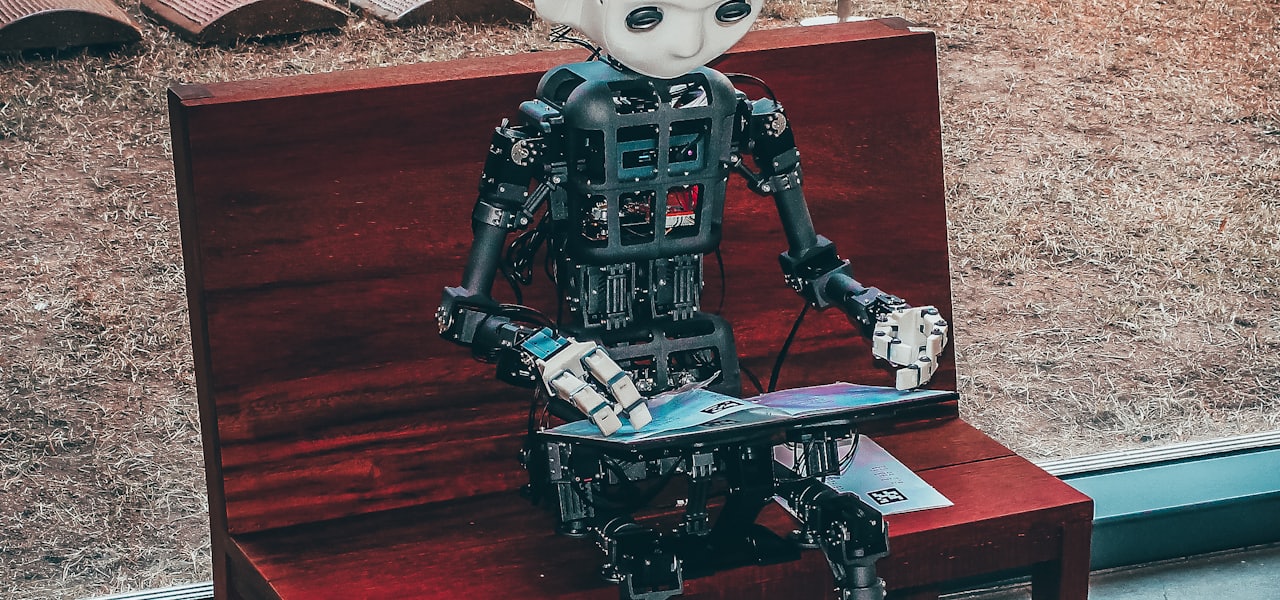
Semi-automation is a process or procedure that is performed by the combined activities of man and machine with both human and machine steps typically orchestrated by a centralized computer controller. Within manufacturing, production processes may be fully manual, semi-automated, or fully automated. In this case, semi-automation may vary in its degree of manual and automated steps. Semi-automated manufacturing processes are typically orchestrated by a computer controller which sends messages to the worker at the time in which he/she should perform a step. The controller typically waits for feedback that the human performed step has been completed via either a human-machine interface or via electronic sensors distributed within the process. Controllers within semi-automated processes may either directly control machinery or send signals to machinery distributed within the process. Centralized computer controllers within semi-automated processes orchestrate processes by instructing the worker, providing electronic communication and control to process equipment, tools, or machines, as well as perform data management to record and ensure that the process meets established process criteria. Many manufacturers choose not to fully automate a process, and instead implement semi-automation due to the complexity of the task, or the number of products produced is too low to justify the investment in full automation. Other processes may not be fully automated because it may reduce the flexibility to easily adapt the processes to reflect production needs.
Scalable Coherent Interface
The Scalable Coherent Interface or Scalable Coherent Interconnect (SCI), is a high-speed interconnect standard for shared memory multiprocessing and message passing. The goal was to scale well, provide system-wide memory coherence and a simple interface; i.e. a standard to replace existing buses in multiprocessor systems with one with no inherent scalability and performance limitations. The IEEE Std 1596-1992, IEEE Standard for Scalable Coherent Interface (SCI) was approved by the IEEE standards board on March 19, 1992. It saw some use during the 1990s, but never became widely used and has been replaced by other systems from the early 2000s. == History == Soon after the Fastbus (IEEE 960) follow-on Futurebus (IEEE 896) project in 1987, some engineers predicted it would already be too slow for the high performance computing marketplace by the time it would be released in the early 1990s. In response, a "Superbus" study group was formed in November 1987. Another working group of the standards association of the Institute of Electrical and Electronics Engineers (IEEE) spun off to form a standard targeted at this market in July 1988. It was essentially a subset of Futurebus features that could be easily implemented at high speed, along with minor additions to make it easier to connect to other systems, such as VMEbus. Most of the developers had their background from high-speed computer buses. Representatives from companies in the computer industry and research community included Amdahl, Apple Computer, BB&N, Hewlett-Packard, CERN, Dolphin Server Technology, Cray Research, Sequent, AT&T, Digital Equipment Corporation, McDonnell Douglas, National Semiconductor, Stanford Linear Accelerator Center, Tektronix, Texas Instruments, Unisys, University of Oslo, University of Wisconsin. The original intent was a single standard for all buses in the computer. The working group soon came up with the idea of using point-to-point communication in the form of insertion rings. This avoided the lumped capacitance, limited physical length/speed of light problems and stub reflections in addition to allowing parallel transactions. The use of insertion rings is credited to Manolis Katevenis who suggested it at one of the early meetings of the working group. The working group for developing the standard was led by David B. Gustavson (chair) and David V. James (Vice Chair). David V. James was a major contributor for writing the specifications including the executable C-code. Stein Gjessing’s group at the University of Oslo used formal methods to verify the coherence protocol and Dolphin Server Technology implemented a node controller chip including the cache coherence logic. Different versions and derivatives of SCI were implemented by companies like Dolphin Interconnect Solutions, Convex, Data General AViiON (using cache controller and link controller chips from Dolphin), Sequent and Cray Research. Dolphin Interconnect Solutions implemented a PCI and PCI-Express connected derivative of SCI that provides non-coherent shared memory access. This implementation was used by Sun Microsystems for its high-end clusters, Thales Group and several others including volume applications for message passing within HPC clustering and medical imaging. SCI was often used to implement non-uniform memory access architectures. It was also used by Sequent Computer Systems as the processor memory bus in their NUMA-Q systems. Numascale developed a derivative to connect with coherent HyperTransport. == The standard == The standard defined two interface levels: The physical level that deals with electrical signals, connectors, mechanical and thermal conditions The logical level that describes the address space, data transfer protocols, cache coherence mechanisms, synchronization primitives, control and status registers, and initialization and error recovery facilities. This structure allowed new developments in physical interface technology to be easily adapted without any redesign on the logical level. Scalability for large systems is achieved through a distributed directory-based cache coherence model. (The other popular models for cache coherency are based on system-wide eavesdropping (snooping) of memory transactions – a scheme which is not very scalable.) In SCI each node contains a directory with a pointer to the next node in a linked list that shares a particular cache line. SCI defines a 64-bit flat address space (16 exabytes) where 16 bits are used for identifying a node (65,536 nodes) and 48 bits for address within the node (256 terabytes). A node can contain many processors and/or memory. The SCI standard defines a packet switched network. === Topologies === SCI can be used to build systems with different types of switching topologies from centralized to fully distributed switching: With a central switch, each node is connected to the switch with a ringlet (in this case a two-node ring). In distributed switching systems, each node can be connected to a ring of arbitrary length and either all or some of the nodes can be connected to two or more rings. The most common way to describe these multi-dimensional topologies is k-ary n-cubes (or tori). The SCI standard specification mentions several such topologies as examples. The 2-D torus is a combination of rings in two dimensions. Switching between the two dimensions requires a small switching capability in the node. This can be expanded to three or more dimensions. The concept of folding rings can also be applied to the Torus topologies to avoid any long connection segments. === Transactions === SCI sends information in packets. Each packet consists of an unbroken sequence of 16-bit symbols. The symbol is accompanied by a flag bit. A transition of the flag bit from 0 to 1 indicates the start of a packet. A transition from 1 to 0 occurs 1 (for echoes) or 4 symbols before the packet end. A packet contains a header with address command and status information, payload (from 0 through optional lengths of data) and a CRC check symbol. The first symbol in the packet header contains the destination node address. If the address is not within the domain handled by the receiving node, the packet is passed to the output through the bypass FIFO. In the other case, the packet is fed to a receive queue and may be transferred to a ring in another dimension. All packets are marked when they pass the scrubber (a node is established as scrubber when the ring is initialized). Packets without a valid destination address will be removed when passing the scrubber for the second time to avoid filling the ring with packets that would otherwise circulate indefinitely. === Cache coherence === Cache coherence ensures data consistency in multiprocessor systems. The simplest form applied in earlier systems was based on clearing the cache contents between context switches and disabling the cache for data that were shared between two or more processors. These methods were feasible when the performance difference between the cache and memory were less than one order of magnitude. Modern processors with caches that are more than two orders of magnitude faster than main memory would not perform anywhere near optimal without more sophisticated methods for data consistency. Bus based systems use eavesdropping (snooping) methods since buses are inherently broadcast. Modern systems with point-to point links use broadcast methods with snoop filter options to improve performance. Since broadcast and eavesdropping are inherently non-scalable, these are not used in SCI. Instead, SCI uses a distributed directory-based cache coherence protocol with a linked list of nodes containing processors that share a particular cache line. Each node holds a directory for the main memory of the node with a tag for each line of memory (same line length as the cache line). The memory tag holds a pointer to the head of the linked list and a state code for the line (three states – home, fresh, gone). Associated with each node is also a cache for holding remote data with a directory containing forward and backward pointers to nodes in the linked list sharing the cache line. The tag for the cache has seven states (invalid, only fresh, head fresh, only dirty, head dirty, mid valid, tail valid). The distributed directory is scalable. The overhead for the directory based cache coherence is a constant percentage of the node’s memory and cache. This percentage is in the order of 4% for the memory and 7% for the cache. == Legacy == SCI is a standard for connecting the different resources within a multiprocessor computer system, and it is not as widely known to the public as for example the Ethernet family for connecting different systems. Different system vendors implemented different variants of SCI for their internal system infrastructure. These different implementations interface to very intricate mechanisms in processors and memory systems and each vendor has to preserve some degrees of
Content repository
A content repository or content store is a database of digital content with an associated set of data management, search and access methods allowing application-independent access to the content, rather like a digital library, but with the ability to store and modify content in addition to searching and retrieving. The content repository acts as the storage engine for a larger application such as a content management system or a document management system, which adds a user interface on top of the repository's application programming interface. == Advantages provided by repositories == Common rules for data access allow many applications to work with the same content without interrupting the data. They give out signals when changes happen, letting other applications using the repository know that something has been modified, which enables collaborative data management. Developers can deal with data using programs that are more compatible with the desktop programming environment. The data model is scriptable when users use a content repository. == Content repository features == A content repository may provide functionality such as: Add/edit/delete content Hierarchy and sort order management Query / search Versioning Access control Import / export Locking Life-cycle management Retention and holding / records management == Examples == Apache Jackrabbit ModeShape == Applications == Content management Document management Digital asset management Records management Revision control Social collaboration Web content management == Standards and specification == Content repository API for Java WebDAV Content Management Interoperability Services
Upworthy
Upworthy is a media brand that focuses on positive storytelling. It was started in March 2012 by Eli Pariser, the former executive director of MoveOn, and Peter Koechley, the former managing editor of The Onion. One of Facebook's co-founders, Chris Hughes, was an early investor. At its peak between 2012 and 2014, it reached up to 100 million people a month. In 2017, the company was acquired by Good Worldwide. == History == Upworthy was launched in 2012 with a focus on aggregating positive content, which aligned with Facebook's algorithm. Originally, Upworthy curators searched the internet for existing content to feature on the site. Once selected as an option, curators brainstormed different headlines and shareable images for the content, and tested it with a small sample of Upworthy's visitors before sharing it on the site. The site popularized a clickbait style of two-phrase headlines. The company simplifies issues that are controversial by nature, which are presented from a politically liberal point of view and are heavily fact-checked for accuracy. In June 2013, an article in Fast Company called Upworthy "the fastest growing media site of all time". It had 8.7 million unique monthly visitors in the first six months, and in November 2013, had a high of 87 million unique visitors in a single month. In 2013, Facebook changed its algorithm, leading to a significant decline in readers from that platform. Upworthy fired one round of writers in 2015, and another in 2016, after an unionization effort by some of the staff. The union involved, the Writers Guild of America, East, has organized several online "viral" news publishers. In January 2017, Upworthy was acquired by media company GOOD Worldwide. The newsrooms of the two organizations would merge as part of the acquisition. About 20 staffers were laid off as part of the merger. In March 2020, Upworthy saw a 65% increase in Instagram followers and a 47% increased interest in positive content on-site page views as a result of increased interest in positive content during the COVID-19 pandemic. In January 2023, National Geographic Books bought Good People: Stories From the Best of Humanity from Upworthy, with a publication date of September 3, 2024. The book is described as "a heartwarming collection of first-person tales that will provide comfort and inspiration to anyone who could use a little dose of joy right now". It was created by two senior Upworthy team members, Gabriel Reilich and Lucia Knell, and features 101 stories from Upworthy's audience. The co-creators encouraged Upworthy followers to connect with the brand through questions on their posts, opening the door for organic and personal stories to be shared in the comment sections. The book debuted on The New York Times nonfiction bestseller list on September 22, 2024, and remained on the list for two weeks. The book is seen in the top 10 on Publishers Weekly Fall 2024 Adult Preview: Lifestyle and on The Washington Post's "5 feel-good books".
Dataset shift
Dataset shift is a phenomenon in machine learning and statistics in which the joint distribution of input variables and target labels is different in the training phase and the deployment or test phase (i.e., P t r a i n ( X , Y ) ≠ P t e s t ( X , Y ) {\displaystyle P_{train}(X,Y)\neq P_{test}(X,Y)} ). This happens when the statistical properties of data used to train a model are no longer representative of the data encountered in real-world use, often resulting in degraded predictive performance and diminished generalization ability. Dataset shift is a generic term for a number of particular types of distributional change. Covariate shift is when the distribution of the input features changes, but the conditional relationship between inputs and outputs remains constant . Prior probability shift (or label shift) happens when the distribution of target labels changes, but the conditional distribution of inputs given labels stays the same. Concept shift (also known as concept drift) is the change of the conditional relationship between inputs and outputs that renders previously learned patterns invalid over time. A key challenge for deploying machine learning systems is dataset shift, in particular in dynamic environments where the data distributions change over time. Detecting and mitigating such shifts is an active area of research, e.g., drift detection, domain adaptation, continual learning.
Content-oriented workflow models
In data management, a content-oriented workflow model seeks to articulate workflow progression by the presence of content units (like data-records/objects/documents). Most content-oriented workflow approaches provide a life-cycle model for content units, such that workflow progression can be qualified by conditions on the state of the units. Most approaches are research and work in progress and the content models and life-cycle models are more or less formalized. The term content-oriented workflows is an umbrella term for several scientific workflow approaches, namely "data-driven", "resource-driven", "artifact-centric", "object-aware", and "document-oriented". Thus, the meaning of "content" ranges from simple data attributes to self-contained documents; the term "content-oriented workflows" appeared at first in as an umbrella term. Such a general term, independent from a specific approach, is necessary to contrast the content-oriented modelling principle with traditional activity-oriented workflow models (like Petri nets or BPMN) where a workflow is driven by a control flow and where the content production perspective is neglected or even missing. The term "content" was chosen to subsume the different levels in granularity of the content units in the respective workflow models; it was also chosen to make associations with content management. Both terms "artifact-centric" and "data-driven" would also be good candidates for an umbrella term, but each is closely related to a specific approach of a single working group. The "artifact-centric" group itself (i.e. IBM Research) has generalized the characteristics of their approach and has used "information-centric" as an umbrella term in. Yet, the term information is too unspecific in the context of computer science, thus, "content-orientated workflows" is considered as good compromise. == Workflow Model Approaches == === Data-driven === The data-driven process structures provides a sophisticated workflow model being specialized on hierarchical write-and-review-processes. The approach provides interleaved synchronization of sub-processes and extends activity diagrams. Unfortunately, the COREPRO prototype implementation is not publicly available. Research on the project had been ceased. The general idea has been continued by Reichert in form of the #Object-aware approach. Synonyms data-driven process structures / data-driven modeling and coordination Protagonists Dr. Dominic Müller (University of Twente), Joachim Herbst (DaimlerChrysler Research), and Manfred Reichert (at this time Assoc. Prof. at Univ. of Twente, currently Prof. at Ulm Univ.) Organization(s) University of Twente, DaimlerChrysler Period 2005 - 2007 Selected publications Implementation COREPRO === Resource-driven === The resource-driven workflow system is an early approach that considered workflows from a content-oriented perspective and emphasizes on the missing support for plain document-driven processes by traditional activity-oriented workflow engines. The resource-driven approach demonstrated the application of database triggers for handling workflow events. Still the system implementation is centralized and the workflow schema is statically defined. The project appeared in 2005 but many aspects are considered future work by the authors. Research did not continue on the project. Wang completed his PhD thesis in 2009, yet, his thesis does not mention the resource-driven approach to workflow modelling but is about discrete event simulation. Synonyms Resource-based Workflows / Document-Driven Workflow Systems Protagonists Jianrui Wang and Prof. Akhil Kumar Organization Pennsylvania State University Period 2005 - today Selected publications Implementation N/A === Artifact-centric === The artifact-centric approach provides a framework for content-oriented workflows. In this model, the enterprise application landscape includes distributed business services, while the workflow engine is centralized. Process enactment is integrated with database management system infrastructure, and the project is funded by IBM. Synonyms artifact-centric business process models / artifact-based business process (ACP) / artifact-centric workflows Protagonists Richard Hull and Dr. Kamal Bhattacharya as well as Cagdas E. Gerede and Jianwen Su Organization IBM (T.J. Watson Research Center, NY) Period 2007 - today Selected publications Implementation ArtiFact === Object-aware === The object-aware approach manages a set of object types and generates forms for creating object instances. The form completion flow is controlled by transitions between object configurations each describing a progressing set of mandatory attributes. Each object configuration is named by an object state. The data production flow is user-shifting and it is discrete by defining a sequence of object states. The discussion is currently limited to a centralized system, without any workflows across different organizations. However, the approach is of great relevance to many domains like concurrent engineering. Finally, the object-aware approach and its PHILharmonicFlows system are going to provide general-purpose workflow systems for generic enactment of data production processes. Synonyms object-aware process management / datenorientiertes Prozess-Management-System Protagonists Vera Künzle and Prof. Manfred Reichert Organization Ulm University Period 2009 - today Selected publications Implementation PHILharmonicFlows === Distributed Document-oriented === Distributed document-oriented process management (dDPM) enables distributed case handling in heterogeneous system environments and it is based on document-oriented integration. The workflow model reflects the paper-based working practice in inter-institutional healthcare scenarios. It targets distributed knowledge-driven ad hoc workflows, wherein distributed information systems are required to coordinate work with initially unknown sets of actors and activities. The distributed workflow engine supports process planning & process history as well as participant management and process template creation with import/export. The workflow engine embeds a functional fusion of 1) group-based instant messaging 2) with a shared work list editor 3) with version control. The software implementation of dDPM is α-Flow which is available as open source. dDPM and α-Flow provide a content-oriented approach to schema-less workflows. The complete distributed case handling application is provided in form of a single active Document ("α-Doc"). The α-Doc is a case file (as information carrier) with an embedded workflow engine (in form of active properties). Inviting process participants is equivalent to providing them with a copy of an α-Doc, copying it like an ordinary desktop file. All α-Docs that belong to the same case can synchronize each other, based on the participant management, electronic postboxes, store-and-forward messaging, and an offline-capable synchronization protocol. Synonyms distributed document-oriented process management (dDPM), distributed case handling via active documents Protagonists Christoph P. Neumann and Prof. Richard Lenz Organization Friedrich-Alexander-Universität Erlangen-Nürnberg Period 2009 - 2012 Selected Publications and a PhD thesis Implementation α-Flow (open source) == Related Concepts == === Content Management === The bandwidth of Content management systems (CMS) reaches from Web content management systems (WCMS) and Document management system (DMS) to Enterprise Content Management (ECM). Mature DMS products support document production workflows in a basic form, primarily focusing on review cycle workflows concerning a single document. === Groupware and Computer-Supported Cooperative Work === Groupware focuses on messaging (like E-Mail, Chat, and Instant Messaging), shared calendars (e.g. Lotus Notes, Microsoft Outlook with Exchange Server), and conferencing (e.g. Skype). Groupware overlaps with Computer-supported cooperative work (CSCW), that originated from shared multimedia editors (for live drawing/sketching) and synchronous multi-user applications like desktop sharing. The extensive conceptual claim of CSWC must be put into perspective by its actual solution scope, that is available as the CSCW Matrix. === Case Handling === The case handling paradigm stems from Prof. van der Aalst and gained momentum in 2005. The core features are: (a) provide all information available, i.e. present the case as a whole rather than showing bits and pieces, (b) decide about activities on the basis of the information available rather than the activities already executed, (c) separate work distribution from authorization and allow for additional types of roles, not just the execute role, and (d) allow workers to view and add/modify data before or after the corresponding activities have been executed. In healthcare, the flow of a patient between healthcare professionals is considered as a workflow - with activities that inc